
Choosing the best 430 Stainless Steel Strips from China requires more than comparing prices. Buyers must examine grade accuracy, surface quality, dimensional control, and supplier reliability. In practical sourcing, small differences matter. A clean slit edge can reduce installation delays, while stable thickness supports consistent forming and stamping.
China has many stainless steel processors, but their capabilities are not identical. A dependable supplier should provide material test certificates, clear production records, and traceable coil information. ASTM A240 and EN 10088 references can help confirm the expected chemistry and mechanical properties. However, paperwork alone is not enough. Sample inspection remains essential.
Look closely at the strip surface. It should be free from deep scratches, rust stains, excessive oil, and uneven discoloration. Confirm the width, thickness tolerance, coil weight, inner diameter, and packaging method before placing an order. For demanding applications, buyers should also discuss edge condition, flatness, magnetic behavior, and forming performance.
Details matter.
The strongest suppliers usually explain their process clearly. They welcome audits, provide realistic lead times, and respond precisely to technical questions. Their packaging should protect narrow strips from moisture and impact during ocean transport. Wooden cases, moisture-resistant wrapping, and secure coil supports can prevent avoidable damage.
Still, “best” is not universal. One supplier may offer excellent polishing, while another provides tighter tolerances or faster delivery. This guide compares important selection factors, leading Chinese manufacturing strengths, and common purchasing risks. Some recommendations may require reconsideration after testing, because laboratory results and factory samples can differ. A careful decision balances evidence, application needs, and long-term supplier communication.
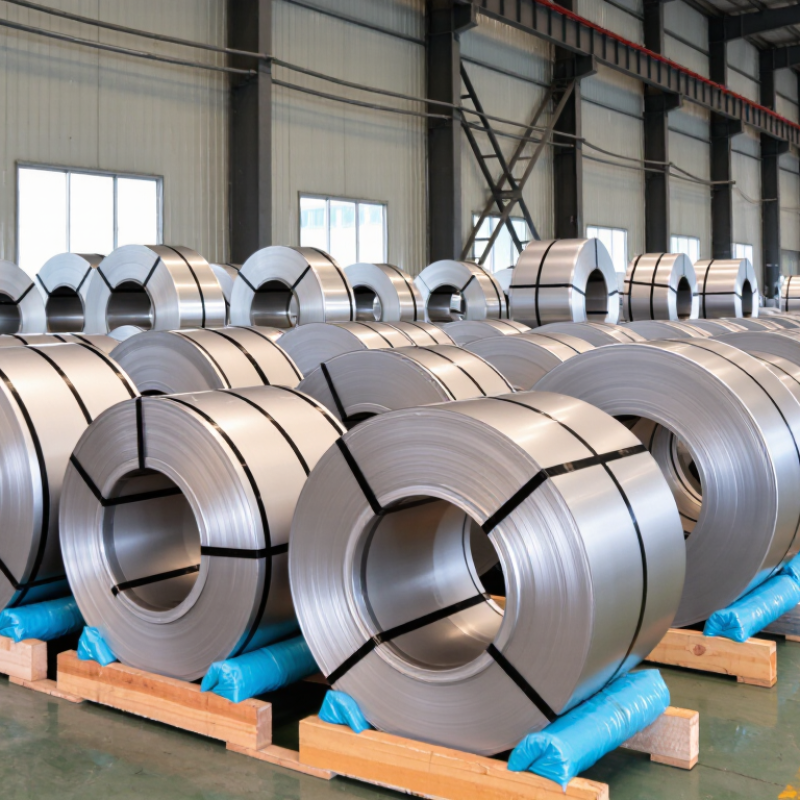
What Is 430 Stainless Steel and Why Is It Used?
430 stainless steel is a ferritic grade containing about 16–18% chromium and very little nickel. ASTM A240/A240M specifies a maximum carbon content of 0.12% for this grade. Its body-centred cubic structure makes it magnetic, unlike common austenitic grades. This property helps fabricators identify it, but magnetism alone cannot confirm quality.
The grade is valued for reasonable corrosion resistance, heat tolerance, and cost control. It suits appliance panels, kitchen equipment, decorative trim, and selected automotive components. It performs well in dry indoor areas. Chloride-rich environments are less forgiving. Salt spray can leave stains, especially when the surface is scratched or poorly cleaned.
The International Stainless Steel Forum reported global stainless crude steel production of about 58.4 million tonnes in 2023. That scale explains the broad availability of 430 strip, including Chinese production. However, “best” should mean verified, not merely inexpensive. Buyers should request a mill test certificate, heat number, thickness tolerance, surface finish, edge condition, and chemical analysis. For narrow strips, flatness and burr control matter greatly during stamping. Some suppliers describe 430 loosely. That is a real concern. Independent testing is wise when the application is exposed, highly visible, or safety-sensitive.
430 stainless steel is a ferritic, magnetic stainless steel commonly selected for appliance panels, kitchen equipment, automotive trim, and architectural applications. Its chromium content of approximately 16–18 wt% provides oxidation and corrosion resistance, while its low carbon content supports forming and fabrication. The chart shows representative ASTM A240 chemical limits in weight percent; iron makes up the balance.
China supplies several 430 stainless steel strip grades, but buyers should separate exact grades from nearby alternatives. The standard 430 grade is commonly identified as 06Cr17 under Chinese specifications, UNS S43000 in ASTM references, and 1.4016 under European designations. JIS SUS430 is another widely used equivalent reference.
430F may appear in some procurement lists, especially for improved machinability. However, its sulfur content differs from standard 430, so corrosion and forming performance should be checked carefully. 430Ti and 439 are ferritic stainless grades with different stabilization or corrosion characteristics. They should not be treated as automatic substitutes.
Surface condition also changes how Chinese 430 strip performs. Common options include 2B, BA, brushed, and polished finishes. Cold-rolled strip may be supplied in narrow widths, tight thickness tolerances, or specific hardness conditions. An experienced buyer should request the chemical analysis, mechanical test results, surface description, and heat number.
Check the certificate.
In practical sourcing, 430 works well for appliance panels, kitchen equipment, decorative parts, and indoor fabrication. It offers useful oxidation resistance and magnetic behavior. Yet it is not the right choice for every wet or chloride-rich environment. I have seen specifications focus on appearance while overlooking edge cracking during stamping. That is a costly mistake. Trial forming, salt exposure testing, and dimensional inspection can reveal problems before production. Some supplier descriptions also use “430 grade” too loosely, so the purchase order should name the standard, finish, thickness, width, and tolerance clearly.
| Grade or Designation | Common Standard | Approximate Chemical Composition, wt.% | Typical Strip Condition | Magnetic Behavior | Key Characteristics | Typical Applications | Best Selection Use |
|---|---|---|---|---|---|---|---|
| ASTM Type 430 / UNS S43000 | ASTM A240; ASTM A480; UNS designation | Chromium: 16.0–18.0 Carbon: ≤0.12 Manganese: ≤1.00 Silicon: ≤1.00 Nickel: generally not specified as an alloying requirement | Annealed, cold-rolled, 2B, BA, No. 3, No. 4, or other agreed surface finishes | Magnetic | Ferritic stainless steel with good oxidation resistance, moderate corrosion resistance, good thermal conductivity, and limited formability compared with austenitic grades | Appliance panels, kitchen equipment, indoor architectural trim, automotive decorative parts, furnace components, and general fabricated strip products | A practical general-purpose 430 strip grade when ASTM documentation and North American acceptance are required |
| 06Cr17 | GB/T 3280; GB/T 20878 | Chromium: 16.0–18.0 Carbon: ≤0.08 Manganese: ≤0.80 Silicon: ≤0.80 Phosphorus: ≤0.035 Sulfur: ≤0.020 | Annealed cold-rolled strip; common finishes include 2B and BA, subject to the purchase specification | Magnetic | The commonly used Chinese 430-type ferritic stainless grade; suitable for standard forming, polishing, bending, and general corrosion-resistant service | Household appliances, cookware components, elevator and interior trim, food-service equipment, sinks, decorative parts, and general industrial strip | A strong choice when the material is purchased to Chinese GB standards and local mill certification is preferred |
| SUS430 | JIS G4304; JIS G4305 | Chromium: 16.0–18.0 Carbon: typically ≤0.12 Manganese: typically ≤1.00 Silicon: typically ≤0.75 Phosphorus: typically ≤0.040 Sulfur: typically ≤0.030 | Cold-rolled strip or sheet in annealed and finished conditions such as 2B or BA | Magnetic | Widely recognized Japanese 430 designation with good resistance to atmospheric oxidation and good surface appearance after suitable finishing | Kitchen equipment, appliance housings, decorative trim, automotive interior components, ventilation parts, and general sheet-metal fabrication | Suitable for China-sourced strip intended for Japanese-standard drawings or Asian supply chains |
| X6Cr17 / 1.4016 | EN 10088-2 | Chromium: 16.0–18.0 Carbon: ≤0.08 Silicon: ≤1.00 Manganese: ≤1.00 Phosphorus: ≤0.040 Sulfur: ≤0.015 | Cold-rolled strip supplied in annealed condition with EN-agreed surface and dimensional requirements | Magnetic | European 430-type ferritic grade offering good resistance in mildly corrosive environments and good suitability for decorative and appliance applications | Domestic appliances, kitchen and catering equipment, architectural interior components, automotive trim, and fabricated strip parts | Appropriate when European EN material designation, tolerances, and inspection requirements are specified |
| 430F / 1.4105 | EN 10088-3; applicable national or purchaser specifications | Chromium: approximately 16.0–18.0 Carbon: typically ≤0.12 Sulfur: intentionally increased for machinability Other limits depend on the applicable standard | Bright bar and machined-product grade; thin strip availability must be confirmed before ordering | Magnetic | Improved machinability compared with standard 430, but the increased sulfur content generally reduces weldability and can reduce corrosion performance | Small machined components, automatic-lathe parts, fasteners, bushings, and precision parts where machining is more important than welding | Select only for machinable components; it is not the preferred choice for welded, deep-drawn, or highly corrosion-exposed strip |
| 430Ti / 1.4513 | EN 10088-2; EN 10088-3 | Chromium: approximately 16.0–18.0 Titanium: stabilized grade Carbon and nitrogen: controlled to support stabilization Exact limits depend on the applicable product standard | Cold-rolled strip may be available to special or project specifications; confirm production capability and certificate requirements | Magnetic | Titanium-stabilized ferritic stainless steel with improved resistance to sensitization during some thermal exposures compared with unstabilized 430 | Heat-exposed panels, exhaust-related components, appliance parts, and applications requiring a stabilized ferritic structure | A specialized alternative when thermal exposure or stabilization is more important than the lowest material cost |
China’s 430 stainless steel strips are manufactured through tightly controlled stages, from melting to final slitting. The process usually begins with chromium-bearing raw materials and low-carbon steel. Electric furnaces melt the charge, while refining equipment reduces unwanted gases and inclusions. Chemical testing matters here. Small composition changes can affect corrosion resistance, magnetism, and forming behavior.
After casting, the slab is heated and hot rolled into a thinner coil. Annealing softens the ferritic structure, and pickling removes oxide scale from the surface. Cold rolling then produces precise thickness and a smoother finish. Depending on the required hardness, manufacturers may repeat annealing and rolling. Final operations can include tension leveling, edge trimming, slitting, and protective packaging. Inspectors normally check thickness, width, surface quality, hardness, and mechanical performance against the requested specification.
Tips: Request a mill test certificate and confirm the production standard before purchase. Ask for sample strips when surface finish or tight tolerances are important. A bright surface can still hide edge cracks. Inspect the edges closely. Also, 430 stainless steel is magnetic and economical, but it is not the best choice for severe chloride exposure. I would not judge quality by appearance alone. Coil records, test data, and consistent sampling provide stronger evidence. Even experienced buyers can overlook packaging damage, especially after long-distance transport.
When evaluating 430 stainless steel strips from China, begin with traceable material records. Request the heat number, chemical composition, mechanical test results, and production standard. A portable PMI test can confirm chromium content during inspection. It cannot replace laboratory testing.
Check dimensions with calibrated micrometers, not a ruler. Measure thickness at several points across the strip and along the coil. Compare actual readings with the agreed tolerance. Width, edge condition, flatness, and coil inner diameter also affect later processing. A strip may meet thickness requirements but still create feeding problems in stamping equipment.
Surface finish needs practical inspection. For 2B, BA, or brushed surfaces, examine samples under bright, angled light. Look for pits, roll marks, scratches, stains, and uneven reflectivity. A smooth appearance can hide defects under warehouse lighting. Surface roughness testing provides stronger evidence than visual judgment alone. Ask for Ra values when appearance matters. Clean gloves help prevent false fingerprints during review.
Experience shows that small sample approvals can be misleading. Inspect multiple sections from the coil, including the outer and inner layers. Check burr height after slitting, because sharp edges can damage tools or injure workers during handling. An independent inspection report adds credibility, but its sampling method deserves careful review. I once treated a perfect sample as representative; that assumption was too generous. Reliable evaluation combines documents, measurements, production records, and realistic trial runs.
What Are the Best 430 Stainless Steel Strips from China?
The best 430 stainless steel strips suit applications needing moderate corrosion resistance, magnetic response, and controlled cost. They typically contain about 16–18% chromium and very little nickel. This ferritic structure supports stable forming for shallow-drawn parts and decorative panels. It also performs well under dry indoor conditions.
Kitchen appliance panels are a strong application. Refrigerator trims, oven liners, sink components, and ventilation covers benefit from 430’s clean surface and magnetic behavior. Automotive interior trim and selected exhaust components can also use it. The International Stainless Steel Forum reported global stainless steel production of about 58.4 million tonnes in 2023. That scale reflects broad demand, but it does not mean every grade fits every environment.
Choose 430 strips for indoor architecture, food-service equipment, shelving, and heat-reflective parts. Surface finish matters. A bright annealed strip may suit visible panels, while a brushed finish can hide fingerprints and fine scratches. In coastal kitchens, swimming-pool areas, or chloride-rich processing rooms, 430 may stain sooner than expected. That limitation deserves attention. The U.S. Geological Survey’s Mineral Commodity Summaries identifies chromium as a critical alloying material for stainless steel production, but alloy content alone cannot guarantee service life. Buyers should verify thickness tolerance, hardness, edge condition, surface roughness, and salt-spray results before approving Chinese supply. Testing only one sample is a weakness. Batch-based inspection is more reliable.