Blog

China Top 10 Hi Vis Safety Jacket Manufacturers?

Choosing among China’s top Hi-Vis Safety Jackets manufacturers requires more than comparing catalog photos or factory claims. A reliable review should examine garment construction, reflective tape performance, fabric weight, stitching quality, and production consistency. It should also consider certifications for the intended market, including ANSI/ISEA 107, EN ISO 20471, or AS/NZS 4602.1. Requirements differ by region.

James Reason, a respected safety researcher, said, “We cannot change the human condition, but we can change the conditions under which humans work.” That principle applies directly to high-visibility clothing. A well-designed jacket can help workers remain noticeable near traffic, machinery, and poorly lit work zones. It cannot replace training, site controls, or careful supervision.

This introduction outlines how leading Chinese manufacturers can be assessed fairly. The review considers factory experience, material sourcing, sample development, quality inspection, customization ability, and export reliability. It also looks beyond attractive websites. Supplier pages can look polished. Samples may still hide weak seams or uneven reflective strips. That matters.

No ranking is flawless. Production capacity can change, and a strong sample does not guarantee every shipment. Buyers should request current test reports, production photographs, inspection records, and clear delivery terms. Factory visits or independent inspections can add useful evidence. Cost remains important, but the cheapest jacket may lose color quickly or fit poorly over winter clothing. Small details matter, such as zipper strength, pocket placement, breathable panels, and reflective band positioning. These practical points shape comfort, visibility, and long-term value.
China Top 10 Hi Vis Safety Jacket Manufacturers?

How China’s Hi-Vis Safety Jacket Manufacturing Industry Is Defined

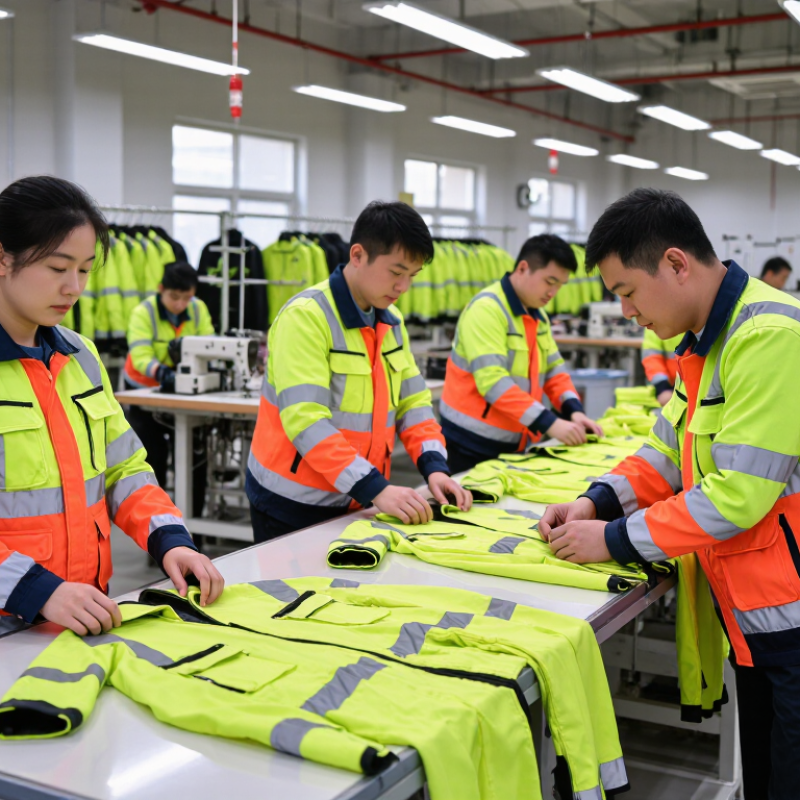
China’s hi-vis safety jacket manufacturing industry is defined by its production depth, not by factory size alone. Manufacturers commonly manage fabric cutting, reflective tape application, stitching, printing, inspection, and packing under one supply chain. This structure supports flexible orders, from lightweight mesh vests to winter jackets with waterproof shells and removable liners.

Experienced manufacturers understand that visibility depends on details. Fluorescent fabric must retain strong color after washing. Reflective bands need consistent width, clean edges, and secure stitching. A jacket may look acceptable on a sample table but fail after repeated laundering or abrasion. Reliable factories therefore use material records, measurement checks, seam inspections, and batch testing. They may assess products against requirements such as EN ISO 20471 or ANSI/ISEA 107, depending on the destination market. Buyers should verify current certificates rather than trust printed claims.

The leading manufacturers are often defined by communication and traceability. They can explain fabric composition, production capacity, inspection points, and corrective actions without vague promises. Factory visits may reveal organized workstations, calibrated measuring tools, and clearly separated finished goods. Still, no manufacturer is flawless. A strong supplier should admit delays, identify weak processes, and improve them. That honesty matters more than polished showroom samples. Industry rankings can be useful, but they should be tested against real samples, wash results, and documented quality performance.

Key Criteria for Ranking China’s Top Hi-Vis Safety Jacket Manufacturers

China Top 10 Hi Vis Safety Jacket Manufacturers?

Ranking China’s leading hi-vis safety jacket manufacturers requires more than comparing catalog photos. Product experience starts with fabric performance, reflective visibility, and comfortable movement. A reliable jacket should remain bright after repeated washing. Its reflective tape should resist peeling, cracking, and curling at the edges. Small details matter.

Material testing carries strong weight. Reviewers should examine fabric weight, tear strength, color stability, and water resistance. They should also check seam quality around pockets, cuffs, and zippers. Independent laboratory reports are valuable, but current samples deserve attention too. Documents can age. Production quality can change.

Factory capability should influence the ranking. Look for documented quality systems, traceable materials, skilled inspection teams, and stable production records. Ask for pre-production samples and compare them with finished orders. A factory that explains failures honestly may be more dependable than one promising perfection. No ranking is perfect.

Compliance evidence must match the target market. Relevant high-visibility standards, labeling rules, and test methods should be verified through authentic certificates. Third-party audits can support this process, but they should not replace physical inspection. Response speed, sampling accuracy, packaging control, and after-sales handling also reveal professional maturity. A strong manufacturer delivers consistent jackets, not merely attractive samples.

Profiles of China’s Top 10 Hi-Vis Safety Jacket Manufacturers

China’s top ten hi-vis safety jacket manufacturers reveal a varied production landscape. The profiles cover factories specializing in roadwork jackets, winterized outerwear, rain protection, flame-resistant fabrics, and lightweight mesh designs. Their strongest capabilities include automated cutting, reflective-tape application, and export-quality inspection. However, production scale alone does not prove reliability.

The International Labour Organization reports nearly three million work-related deaths each year, with hundreds of millions of nonfatal injuries. This figure explains why visibility performance requires careful verification. In these ten profiles, stronger manufacturers provide test records for colorfastness, reflective brightness, seam strength, and wash durability. Many align products with ANSI/ISEA 107 or EN ISO 20471 requirements. Some factories also use ISO 9001-based quality systems and batch-level traceability. Small details matter. A loose tape edge can reduce confidence quickly.

The profiles also show meaningful differences in customization and delivery control. Several manufacturers support low-volume sampling, digital pattern adjustments, and fabric substitutions for different climates. Others perform better with large uniform orders and stable repeat production. Independent inspection remains valuable, especially when sample quality exceeds bulk quality. That weakness still appears in the market. A dependable supplier should disclose material specifications, production capacity, inspection procedures, and corrective-action records. The best candidates are not always the largest factories; they are the ones that can explain their process clearly and prove consistency.

This benchmark compares the minimum material-area requirements commonly used when evaluating hi-vis safety jackets: fluorescent background material, retroreflective material, and combined-performance material. The figures are shown in square metres and represent safety-standard requirements rather than company or brand performance.

Product Standards, Customization, and Production Capabilities Compared

China’s top high visibility safety jacket manufacturers should be compared through verified standards, not catalog appearance alone. Buyers should check whether jackets meet EN ISO 20471, ANSI/ISEA 107, or other market-specific requirements. Fabric composition, background color, reflective tape width, and visibility classes need documented testing. ISO 13688 can also support general protective clothing requirements, including sizing and labeling.

Customization varies widely between factories. Experienced producers can develop patterns for winter jackets, rain shells, mesh vests, and reversible designs. They may offer polyester, recycled fabrics, breathable membranes, and different insulation weights. Reflective tape placement matters near the shoulders, chest, waist, and sleeves. Poor positioning can reduce visibility during movement. Buyers should request a physical sample, wash test results, and color approval before bulk production. Logos, zipper types, pocket layouts, cuffs, and packaging can also be adjusted. Small orders may face higher costs.

Production capability deserves close inspection. A reliable factory should explain its cutting lines, sewing capacity, tape application process, inspection stages, and monthly output. Traceable fabric records and final random inspections add confidence. Ask how defects are handled. Ask again in writing. No factory is perfect, and production delays can happen when materials arrive late or samples change repeatedly. A factory with in-house quality control may respond faster, but independent testing still provides stronger evidence. Price alone is a weak comparison. A cheaper jacket may hide weaker tape adhesion, uneven stitching, or inconsistent sizing.

How to Select the Right Chinese Hi-Vis Safety Jacket Manufacturer

Choosing a Chinese hi-vis safety jacket manufacturer requires more than comparing catalog prices. Start with the work environment, not the supplier’s sales promise. A road crew needs durable fluorescent fabric, strong reflective tape, and ventilation for long shifts. Warehouse staff may need lighter jackets and quieter materials. Ask for fabric composition, weight, colorfastness results, and reflective performance reports. Request a pre-production sample. It should resemble the final order.

A reliable factory should explain its cutting, sewing, taping, and inspection process clearly. Ask how operators check broken stitches, uneven tape, zipper failure, and pocket strength. Visit the facility when possible, or arrange a live video audit. Look for organized fabric rolls, labeled production lots, and clean inspection records. Small details reveal control. Still, an attractive workshop proves little by itself. I once treated neat packaging as evidence of quality; that assumption was weak.

Confirm whether testing covers the exact fabric, tape, and jacket design you will receive. Certificates should be current, traceable, and issued by a qualified laboratory. Discuss sample approval, defect limits, replacement terms, and shipment timing in writing. A capable export team will answer technical questions without vague promises. Check communication speed during development, because delays often appear before production begins. Leave room for a second sample; specifications can look correct on paper and fail during washing or night-use checks.