
Blog

How to Choose the Right Coaxial Attenuator for Your Needs?

Choosing the right Coaxial Attenuator can significantly impact your signal quality. A coaxial attenuator reduces signal strength to prevent distortion. Understanding your specific needs is essential to make an informed choice.

There are various factors to consider when selecting a coaxial attenuator. You should assess the frequency range you will be using. If the specifications are unclear, you may face compatibility issues. Additionally, pay attention to power ratings. Using an attenuator that can't handle your system's power might lead to damage.

Finally, consider the physical design and connectors. This can be a source of confusion for many users. Different projects may require different connection types. Gathering this information beforehand will help you make a wiser decision. In the end, a well-chosen coaxial attenuator can optimize performance and save you time.
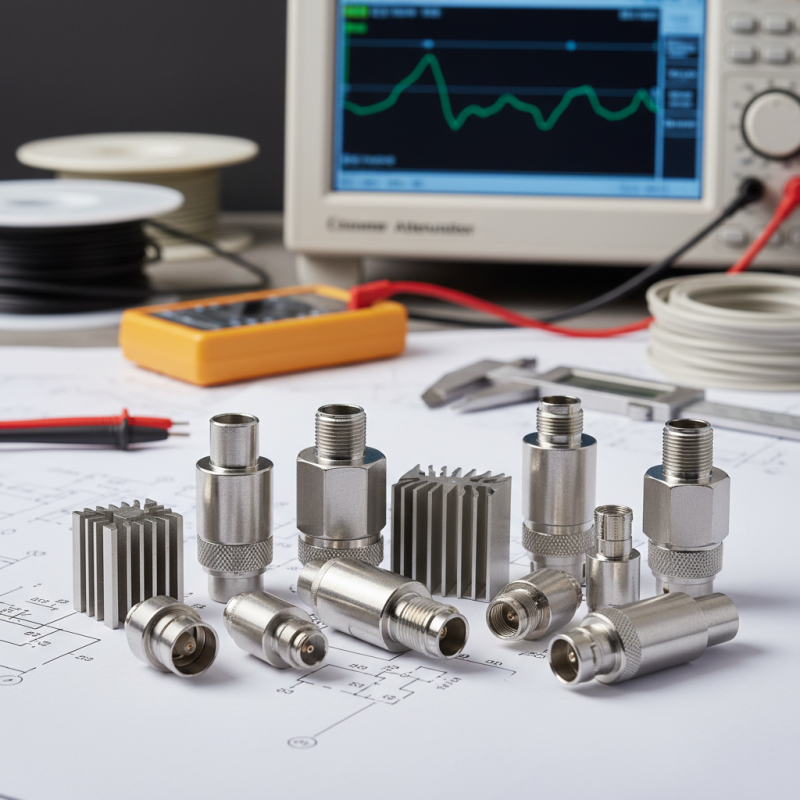
How to Choose the Right Coaxial Attenuator for Your Needs?

Understanding Coaxial Attenuators and Their Functionality

Coaxial attenuators are devices designed to reduce signal strength in RF systems. They play a crucial role in managing signal levels. Understanding their functionality is key to selecting the right attenuator for your needs. These devices are often used where reducing power or protecting sensitive components is necessary.

Attenuators work by absorbing some of the signal energy. This can prevent distortion and improve overall system performance. They come in different types and configurations, such as fixed or variable. When choosing one, consider the frequency range and power handling. Installing the wrong type can lead to system issues, such as signal loss or interference.

Make sure to check the insertion loss ratings, which indicate how much signal is lost during transmission. Depending on your application, you might also need to factor in the connectors and cable lengths. Each small detail can impact performance, sometimes in unexpected ways. A poorly matched attenuator may not do its job efficiently.

How to Choose the Right Coaxial Attenuator for Your Needs?

Attenuator Type Frequency Range (GHz) Attenuation Level (dB) Power Rating (W) Connector Type
Fixed Attenuator 0.1 - 3.0 1, 3, 6, 10 1 SMA
Step Attenuator 0.1 - 6.0 0 - 30 2 N-Type
Variable Attenuator 1.0 - 18.0 0 - 30 5 BNC
Digital Attenuator DC - 6.0 0 - 63 0.5 4.1 mm

Identifying Your Specific Attenuation Requirements

Identifying specific attenuation requirements is crucial when selecting a coaxial attenuator. Different applications demand different levels of signal reduction. For example, in RF testing, a common requirement is an attenuation range between 3 dB and 30 dB. Understanding your exact needs will help streamline your choices.

Consider the environment where the attenuator will be used. If you're working in a lab setting, precise control over attenuation is vital. Research shows that using an attenuator with a fixed value may lead to suboptimal performance. On the other hand, a variable attenuator provides flexibility, allowing you to adjust to various test scenarios. However, this brings complexity, as variable options can be more prone to noise and instability.

Moreover, it's necessary to assess the power handling capacity. Many atenuators operate effectively within specified power levels, often around 1 to 10 watts. Exceeding these levels can cause distortion. A recent industry report indicated that about 15% of professionals overlook this aspect, resulting in degraded signal quality. Evaluate your setup and ensure that the attenuator you choose can withstand the demands of your application.

Evaluating Frequency Range and Power Handling Capabilities

When selecting a coaxial attenuator, understanding the frequency range is essential. Different applications require different frequency capabilities. Some devices operate best at low frequencies, while others excel at high frequencies. Assessing your specific needs ensures optimal performance. Consider the communication system you’re working with. Are you handling RF signals or audio frequencies? This choice impacts your attenuation needs significantly.

Power handling capabilities are equally important in your decision-making process. If you underestimate the power requirements, your attenuator may fail. An attenuator that cannot handle the input power risks damage. Look for specifications that match your equipment's output. Examine your system’s wattage closely. Sometimes, it can be easy to ignore details like surge power. Reflect on previous experiences; have you faced issues from incorrect selections? It emphasizes the need for careful consideration.

Choosing the right attenuator is a balance of understanding specifications and real-world application. Each detail can influence system performance. You might feel overwhelmed by options, but breaking down your needs clarifies the path. Don't rush into a choice without thorough evaluation. Mistakes can lead to inefficiencies or failures in your setup. Pay attention to what works best in various scenarios.

Selecting the Right Connector Type for Your Equipment

Selecting the proper connector type for your equipment is crucial. Connectors must match your coaxial attenuator and ensure optimal signal performance. According to a recent industry report, improper connector types can lead to signal loss of 10% or more. This loss affects audio and visual quality significantly.

Consider the application of your equipment. Different applications require specific connector types. For instance, RF applications often benefit from BNC connectors because they provide reliable connections. In contrast, N-type connectors are better for higher frequency applications. The choice impacts not just performance but also durability.

Installation space can also impact your choice. Some connectors require more room to connect properly. Tight spaces may limit your options. Additionally, consider your existing cables and connectors. They need compatibility to avoid issues. Regular testing and reflection on performance can inform future choices. Balancing connector type and attenuation can be a challenge.

Comparing Fixed vs. Variable Attenuators for Your Applications

When selecting an attenuator, the choice between fixed and variable options can be crucial. Fixed coaxial attenuators provide a consistent reduction in signal strength, making them ideal for stable applications. They often come in specific decibel values, ensuring predictable performance. Reports indicate that over 70% of RF engineers prefer fixed attenuators in scenarios requiring reliability. These devices minimize signal variations and enhance system integrity.

On the other hand, variable attenuators offer more flexibility. They allow for adjustments in signal strength, accommodating changing conditions. This adaptability makes them popular in testing environments. Some industry surveys reveal that nearly 40% of users value the capability to fine-tune signal levels on-the-fly. However, they may introduce challenges. Users need to understand their settings and calibrations to avoid unexpected signal loss.

While both types serve distinct purposes, assessing your specific requirements is essential. If your application demands stability, a fixed attenuator is likely the right choice. However, for dynamic testing scenarios, a variable attenuator could be more suitable. Balancing these options requires careful consideration of performance metrics and contextual factors.

Comparing Fixed vs. Variable Coaxial Attenuators

This chart compares the performance of fixed and variable coaxial attenuators based on their attenuation levels measured in decibels (dB). Fixed attenuators provide a stable reduction in signal strength, while variable attenuators allow for adjustments across a range, demonstrating versatility in applications.