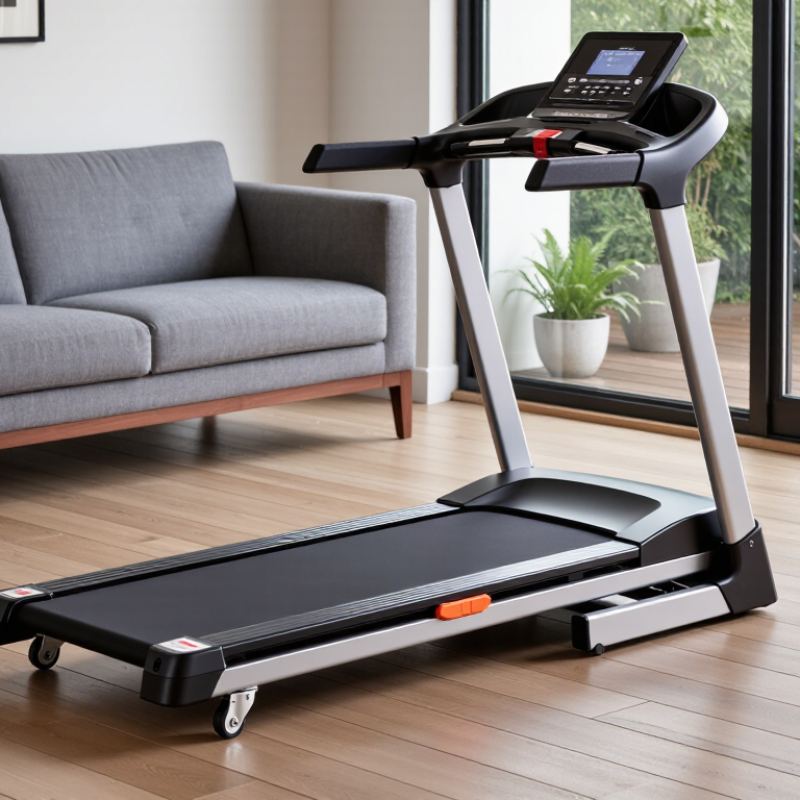
A portable treadmill is a compact walking or running machine designed for easier storage and movement. Unlike fixed gym equipment, it often has a folding frame, transport wheels, or a thinner walking deck. It works through a motor that turns the belt beneath your feet. Sensors and controls adjust speed, while some models add incline functions. In practical use, motor strength affects smoothness, noise, and long-term durability. Not every model is truly portable.
The main types include walking pads, folding treadmills, and under-desk treadmills. Walking pads are usually slim and suit light walking in apartments or offices. Folding treadmills provide more support for jogging, but they need extra floor space when opened. Under-desk models normally prioritize quiet operation and low speed. Running needs more deck length. A user under 170 centimeters may manage with a shorter deck, while taller runners often need more room for a natural stride. Check the maximum user weight, too.
Portability depends on more than weight. A compact treadmill may still feel awkward without sturdy wheels and a reliable handle. Measure your storage area before buying, including doorways and furniture clearance. I have seen people focus on folded height and forget the machine’s width. That is an easy mistake. A treadmill weighing 25 kilograms can be manageable for one person, yet difficult on stairs. Consider lifting points, cable placement, deck thickness, and noise on hard floors. A rubber mat can reduce vibration, though it will not fix an underpowered motor.