Blog

China Top 10 Hydraulic Cylinder Manufacturers for Excavators

Excavators depend on hydraulic cylinders to turn pump pressure into controlled lifting, digging, and slewing force. On a jobsite, a cylinder must withstand repeated pressure cycles, shock loads, abrasive dust, and changing temperatures. A small seal leak can become costly downtime. Conditions vary.

Market reports help explain why dependable components matter. Grand View Research valued the global hydraulic cylinder market at approximately USD 14.17 billion in 2023 and forecast a 4.3% compound annual growth rate from 2024 to 2030. The estimate covers multiple applications, not excavators alone. China’s Construction Machinery Association reported 195,018 excavator sales in China in 2023, including domestic sales and exports. Together, these figures point to a large equipment ecosystem, but they do not prove that every supplier meets the same standards.

This guide introduces ten Chinese manufacturers associated with excavator hydraulic cylinders. It considers product range, engineering capability, manufacturing experience, quality controls, and service support. Buyers should also check cylinder dimensions, working pressure, material specifications, seal options, and compatibility with the machine model. A Hydraulic Cylinder For an excavator is not a generic substitute; fit and operating conditions matter. Company rankings can simplify research, but they cannot replace drawing reviews, sample testing, or a site-specific assessment. Some public company information is incomplete, so readers should verify current certifications, capacity, and references directly with each manufacturer.
China Top 10 Hydraulic Cylinder Manufacturers for Excavators

Hydraulic Cylinders in Excavators: Types and Core Functions

China Top 10 Hydraulic Cylinder Manufacturers for Excavators
Hydraulic Cylinders in Excavators: Types and Core Functions

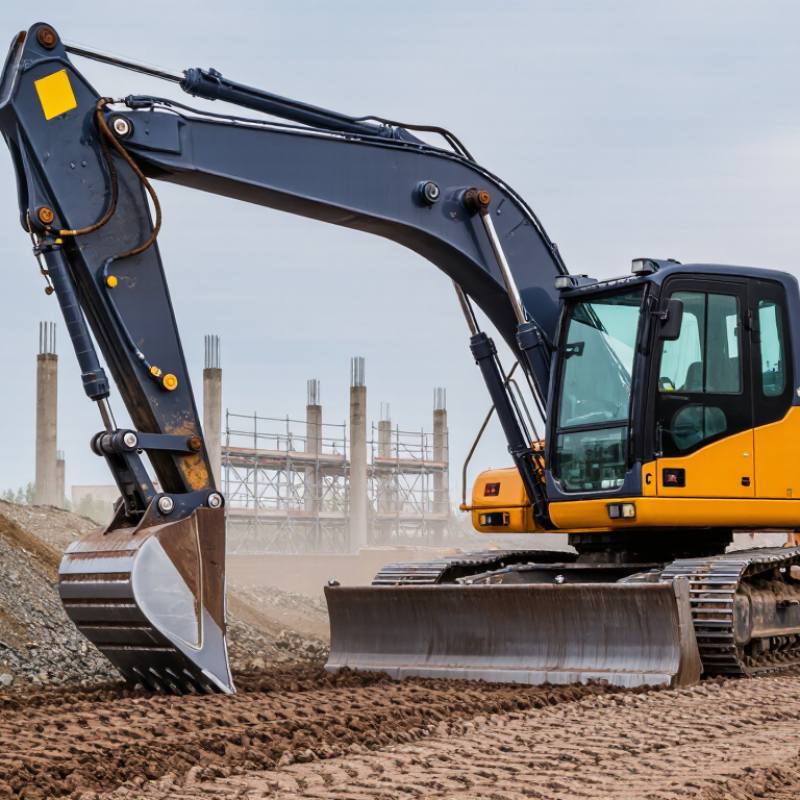
An excavator’s boom, arm, and bucket each rely on hydraulic cylinders to create controlled linear movement. Most are double-acting: pressurized oil moves the piston in both directions. The boom cylinders lift the front assembly, while the arm cylinder reaches outward or pulls material closer. The bucket cylinder curls the bucket for digging and tips it for dumping. Different tasks, different forces.

Inside each cylinder, a piston separates two oil chambers. The rod transfers force to the linkage, and seals help keep oil in while excluding dirt. A scratched rod or leaking seal can reduce performance and allow contamination to spread through the hydraulic system. Cylinder sizing and mounting geometry also matter; pressure alone does not explain how much force reaches the bucket. A diagram can make this look simple. Field wear often says otherwise.

Tips: Check exposed rods for dents, rust, and fresh oil after operation. Keep fittings clean during inspection, and follow the machine’s service guidance before opening any hydraulic connection. If a cylinder moves unevenly, note the load and operating conditions; a single symptom may have several causes.
Criteria for Identifying Leading Chinese Manufacturers

Criteria for Identifying Leading Chinese Manufacturers

Selection should begin with verifiable production and service evidence, not factory size. The China Construction Machinery Association recorded 201,131 excavator sales in 2024, including 100,588 exports. That scale makes consistent output and export-market support important screening criteria. Sales figures alone, however, reveal nothing about cylinder reliability.

Ask for drawings, rated pressure, stroke tolerances, and documented endurance-test results. Check that test records identify the sample, test conditions, cycle count, and failure criteria. For a physical inspection, examine rod coatings, welds, seal surfaces, and machining marks. A polished rod can still fail. Confirm that materials and components are traceable through production records, and review how the manufacturer investigates field failures. Quality-system certification can support confidence, but it does not replace product-level evidence.

Compare warranty terms, spare-parts lead times, and technical response arrangements for the regions where machines will operate. Ask for anonymized service data from comparable excavators, rather than relying on broad claims about durability. No scorecard is perfect: comparable warranty data is often difficult to obtain. That limitation should be recorded, not ignored. The 2024 sales figures cited above come from the China Construction Machinery Association’s excavator-industry statistics; they indicate market scale, not component quality.

Profiles of China’s Top 10 Excavator Hydraulic Cylinder Manufacturers

Profiles of China’s top ten excavator hydraulic cylinder manufacturers should be compared by capability, not just catalog size. Some suppliers focus on large-bore cylinders for mining machines, while others produce compact units for mid-size excavators. Their workshops may include deep-hole boring, honing, robotic welding, and pressure-testing equipment. These details matter when cylinders face repeated shock loads, abrasive dust, and long operating shifts.

A useful profile also explains engineering support. Look for clear information about rod coatings, seal options, tube tolerances, and tested pressure ranges. Ask whether a supplier can match mounting dimensions and hydraulic connections, since small differences can complicate installation. Fit matters. Production volume alone does not prove durability. Sample test records and traceable inspection steps offer more useful evidence than broad performance claims.

The ten manufacturers may differ in export experience, customization capacity, and access to replacement parts. Some are better suited to repeat orders; others may handle unusual dimensions or smaller batches. Public profiles rarely show how a cylinder performs after years of field use, so published specifications cannot tell the whole story. That gap deserves attention. Buyers should compare drawings, testing methods, and service response before deciding which supplier fits a particular excavator fleet.

China Top 10 Hydraulic Cylinder Manufacturers for Excavators - Profiles of China’s Top 10 Excavator Hydraulic Cylinder Manufacturers
Profile Common Excavator Cylinder Focus Typical Configuration Relevant Manufacturing Capability Key Quality Checks Information to Verify with a Supplier
Profile 1 Boom cylinders Double-acting cylinder; dimensions and mounting points vary by excavator model. Machining of large-diameter tubes, piston rods, and mounting ends. Pressure testing, seal inspection, rod surface inspection, and dimensional checks. Bore, rod diameter, stroke, pin dimensions, operating pressure, and port type.
Profile 2 Arm (stick) cylinders Double-acting cylinder matched to the arm geometry and linkage of the machine. Precision boring and honing; controlled assembly of piston and gland components. Stroke and mounting-center measurements, leakage testing, and surface-finish checks. Exact machine model, serial-number range, stroke, pin sizes, and hose connection details.
Profile 3 Bucket cylinders Double-acting cylinder that operates the bucket linkage; geometry is model-specific. Production of compact cylinder assemblies and linkage-compatible mounting features. Seal installation, rod straightness, port integrity, and functional testing. Bucket linkage arrangement, retracted and extended lengths, pin sizes, and required seals.
Profile 4 Blade cylinders Usually a double-acting cylinder for blade lift or positioning on equipped machines. Manufacturing of shorter-stroke cylinders and application-specific end fittings. Mounting alignment, stroke verification, pressure-hold testing, and leak inspection. Whether the machine has a blade, cylinder function, mounting dimensions, and port orientation.
Profile 5 Boom-offset cylinders Configuration depends on the excavator’s offset-boom design and linkage. Custom machining and assembly for less-common, model-dependent cylinder geometries. Dimensional verification against drawings and checks for interference through the stroke. Machine configuration, drawing or sample part, stroke, mounting details, and clearance requirements.
Profile 6 Quick-coupler cylinders Compact actuator cylinder designed for a compatible quick-coupler mechanism. Small-cylinder assembly, port configuration, and accessory-specific fitment. Leak testing, connector compatibility, and verification of the coupler’s required stroke. Coupler make and model, locking arrangement, cylinder dimensions, and hydraulic connection type.
Profile 7 Clamp or thumb cylinders Double-acting cylinder used with a clamp or thumb attachment; application varies. Adaptation of cylinder ends and ports to attachment-specific mounting requirements. Mounting fit, stroke, seal condition, and operation across the attachment’s travel. Attachment model, pin dimensions, available space, required stroke, and port orientation.
Profile 8 Replacement-cylinder programs Direct-replacement assemblies intended to match an existing cylinder’s interfaces. Dimensional inspection, drawing control, and production of replacement assemblies. Comparison with the original part, including overall length, pins, ports, and stroke. Machine model and serial number, original part number if available, and measurements or photographs.
Profile 9 Heavy-duty cylinder applications Application-specific assemblies selected for the machine’s loads and hydraulic circuit. Material control, robust component machining, and documented assembly procedures. Material and process records, pressure testing, dimensional checks, and traceability. Duty cycle, operating conditions, required documentation, and the machine maker’s specifications.
Profile 10 Custom and low-volume cylinders Made to a drawing, sample, or agreed specification; not necessarily interchangeable across models. Engineering review, prototype production, and controlled revision management. Approval of drawings, first-article dimensions, functional testing, and revision identification. Approved drawing, tolerances, materials, seals, finish requirements, test criteria, and delivery quantity.

Note: Company names and brands are intentionally omitted. These are representative product and capability profiles, not verified profiles or a ranking of specific manufacturers. Cylinder dimensions, pressure ratings, materials, and testing requirements vary by excavator model and supplier; confirm them against the machine specifications and approved drawings.

Comparing Product Ranges, Capabilities, and Certifications

A practical comparison of ten excavator-cylinder manufacturers should start with product range. Check whether each supplier offers boom, arm, and bucket cylinders, plus standard and custom sizes. Bore diameter, stroke length, mounting points, and operating pressure should match the machine. Small mismatches matter. A catalog may look broad, yet omit the exact pin spacing or seal configuration needed.

Capabilities reveal how well a supplier can support demanding work. Look for documented pressure and leakage tests, weld inspection, surface treatment, and traceability for critical components. Ask whether testing records are available for the specific cylinder, not merely for a general product family. Certifications also need context. Quality-system certificates, such as ISO 9001, describe management processes; they do not by themselves prove that every cylinder suits a particular excavator. Details matter.

Compare material options, corrosion protection, repair support, and replacement-part availability alongside manufacturing capacity. A short lead time is useful, but only if dimensional control remains consistent across batches. Not always. The comparison is rarely perfectly tidy: published specifications may use different test conditions, making direct rankings uncertain. Request drawings, test criteria, and certificate scope before deciding. A clear answer to those questions can be more valuable than an impressive product list.

China Top 10 Hydraulic Cylinder Manufacturers for Excavators — Comparing Product Ranges, Capabilities, and Certifications

Standards-based pressure-class reference; this chart does not rank or compare individual manufacturers.

ISO 6020-1 and ISO 6020-2 specify 16 MPa cylinder series, while ISO 6022 specifies a 25 MPa series. These are standard pressure classes, not evidence of any manufacturer’s product range, certification, or performance.

Reference: ISO 6020-1, ISO 6020-2, and ISO 6022.

How to Choose the Right Manufacturer for Your Excavator Project

China Top 10 Hydraulic Cylinder Manufacturers for Excavators

How to Choose the Right Manufacturer for Your Excavator Project

Choosing a cylinder manufacturer starts with your excavator’s actual duty cycle, not a catalogue headline. Grand View Research estimated the global hydraulic cylinder market at USD 14.56 billion in 2023, with projected growth through 2030. This is useful market context, not proof of supplier quality. Even careful buyers can miss the basics. Share the bore, rod diameter, stroke, operating pressure, mounting dimensions, and expected cycle rate. Ask whether the proposed design accounts for shock loads, mud, temperature swings, and side loading. A polished drawing is not enough. Request material certificates, pressure-test records, and dimensional inspection results for the cylinder configuration you plan to order.

For field reliability, compare seal materials, rod surface treatment, weld quality, and repair support. Ask how the supplier controls cleanliness during assembly; ISO 4406 provides a standard code for reporting hydraulic-fluid particle contamination. Also request a clear warranty scope and realistic lead times for seals and replacement parts. One detail is easy to overlook: a cylinder can pass a bench test but wear early if the machine’s linkage creates side load. Review that risk with the supplier’s engineering team, using your machine drawings where possible. A small pilot order can reveal fit and service issues before fleet-wide purchasing. It takes longer. Sometimes that is the sensible choice.