Blog

Top 10 Lithium Battery Manufacturers in China?

China has become a major hub for Lithium Batteries, serving electric vehicles, energy storage, and portable electronics. Its manufacturers range from large cell producers to specialists that assemble battery packs for particular applications. That difference matters: a company supplying cells may not offer the same design support or finished systems as a pack integrator.

This guide introduces ten Chinese manufacturers and the capabilities buyers may want to compare. Look beyond production claims. Cell format, chemistry, stated cycle life, thermal management, and quality-control practices can all shape a product’s suitability. A datasheet is a starting point, not proof of performance. Ask how test conditions were defined and whether results apply to the exact model under consideration. Details matter.

The companies are presented as options to research, not as a universal ranking or endorsement. Market positions and product lines change, and a strong fit depends on the application, budget, service needs, and production scale. Public information may also leave gaps; that is worth acknowledging rather than smoothing over. Before making a decision, verify current specifications, manufacturing capabilities, and support arrangements directly with each supplier. This overview offers a practical starting point, while careful due diligence remains essential.
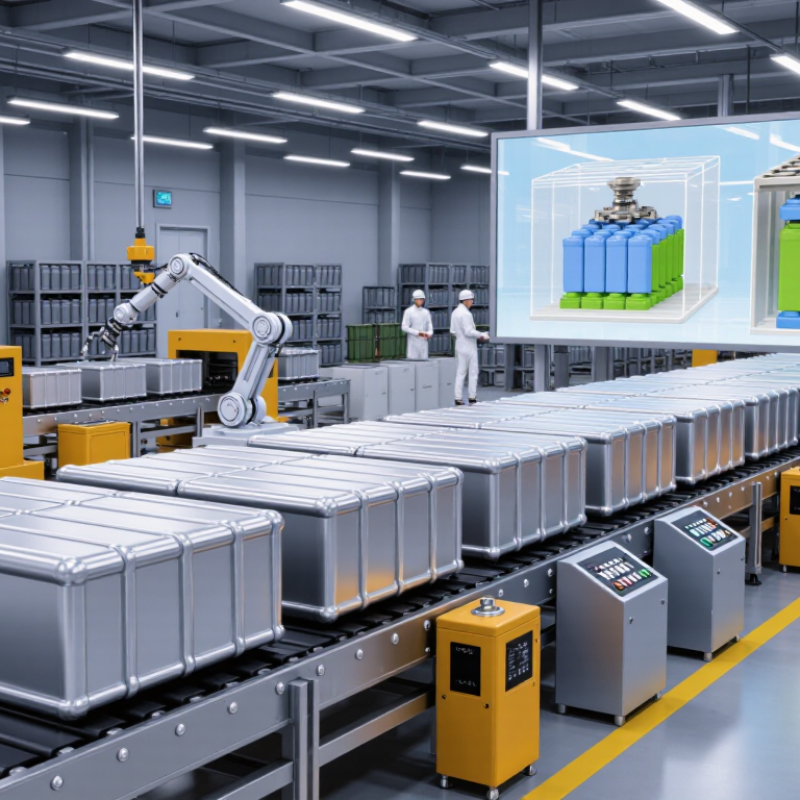
Top 10 Lithium Battery Manufacturers in China?

How the Top 10 Manufacturers Are Selected

A credible top-ten list needs a transparent scorecard, not factory size alone. I would assess verified annual cell output, production consistency, chemistry range, quality controls, and delivery performance. IEA’s Global Supply Chains of EV Batteries (2024) estimates that China held nearly 85% of global battery-cell manufacturing capacity in 2023. Capacity, however, does not prove that every line runs efficiently or that customers receive consistent cells. That distinction matters.

Demand is rising fast. The IEA’s Global EV Outlook 2024 reports that global electric-vehicle battery demand reached about 750 GWh in 2023, up roughly 40% year over year. A selection method should therefore check whether reported output aligns with shipment data and disclosed production capacity. It should also review safety testing, traceability, and independent certifications, rather than relying only on company claims. Useful evidence includes audited filings, technical disclosures, and documented customer applications. Small details count: stable output across quarters is more informative than one impressive production figure. A neat scorecard still has blind spots. Public data can be uneven, and rankings may shift when reporting periods or product mixes differ.

A Snapshot of China’s Ten Leading Lithium Battery Makers

A snapshot of China’s ten leading lithium battery makers reveals a varied industrial landscape, not a simple ranking. Some manufacturers focus on electric vehicle cells, while others supply batteries for buses, household storage, or large grid projects. Their strengths differ in cell format, chemistry, production scale, and ability to deliver consistent quality. There is no single measure of leadership. Annual output, shipment volume, and manufacturing capacity can describe very different things.

Factory details matter. A stable coating line, clean assembly area, and careful quality checks can affect how reliably cells perform. So can access to materials and close coordination with vehicle or storage-system makers. Large production volumes attract attention, but they do not guarantee the best fit for every application. Small details matter. Buyers should compare verified specifications, safety testing, warranty terms, and support after delivery. The picture is not perfectly neat: public data may use different reporting periods, and capacity figures can exceed actual output. A careful comparison leaves room for that uncertainty.

Company Profiles: Products, Scale, and Specializations

China’s lithium battery manufacturers span cell production, module assembly, and complete energy-storage systems. A useful company profile should identify the products each maker actually builds: cylindrical, prismatic, or pouch cells; battery packs; or integrated storage cabinets. These formats serve different needs. A compact pack for an electric scooter is not interchangeable with a cabinet designed for a factory floor.

Scale needs more than a large capacity figure. Check stated annual output against factory footprint, production lines, and quality-control processes. A maker with automated cell inspection may suit high-volume orders, while a smaller specialist may offer more flexible pack designs.

Scale can mislead. Capacity figures do not always show how much usable output is available to customers. Specialization matters, too: some manufacturers focus on mobility, while others develop products for backup power, commercial storage, or industrial equipment. Ask about cycle-life testing, thermal management, and traceable quality records. Details like these reveal more than a polished brochure. Profiles can still be incomplete; published figures change, and not every factory shares the same level of detail.

Comparing Technologies and Market Strategies

China’s lithium-battery manufacturers compete through cell chemistry, production scale, and customer-specific engineering—not output alone. The International Energy Agency reported that China held about 75% of global cell-making capacity, 70% of cathode capacity, and 85% of anode capacity in 2021. These figures show a supply-chain advantage, but do not prove every producer leads in quality or safety. Scale matters.

A useful comparison separates lithium iron phosphate (LFP) from nickel-rich chemistries. LFP can favor cost, thermal stability, and frequent cycling; nickel-rich cells can offer higher energy density where vehicle range matters. Actual performance also depends on cell design, pack cooling, and production consistency. Not a small distinction. Public specifications do not always show how cells perform after years of use.

Market strategies differ too: some suppliers emphasize standardized, lower-cost cells, while others invest in custom packs, fast charging, or long-term supply agreements. BloombergNEF’s 2023 Battery Price Survey put average lithium-ion pack prices at $139 per kilowatt-hour, 14% below 2022, intensifying cost pressure. This comparison has limits: public data rarely reveals manufacturing yields, warranty claims, or degradation across climates. Buyers should compare independently tested cycle-life and thermal-performance data, not rely on headline capacity alone.

Top 10 Lithium Battery Manufacturers in China? — Comparing Technologies and Market Strategies An anonymized, non-ranked comparison of major manufacturer profiles and their commonly reported portfolio characteristics
Anonymous profile Common battery chemistries Cell formats and pack approaches Major application markets Typical market strategy Comparison point
Manufacturer 1 Lithium iron phosphate (LFP) and nickel-based chemistries, including NMC Prismatic cells; cell-to-pack and other integrated pack designs Passenger electric vehicles, commercial vehicles, and energy storage systems Large-scale supply, broad product coverage, and overseas production or partnerships Broad chemistry and application range; product specifications vary by customer program.
Manufacturer 2 Primarily LFP, alongside nickel-based options in selected applications Long prismatic cell designs and integrated pack architectures Passenger EVs, buses, commercial vehicles, and stationary storage Close integration of battery development with vehicle platforms and manufacturing Emphasizes pack integration and LFP offerings; chemistry depends on the vehicle or storage application.
Manufacturer 3 LFP and nickel-based lithium-ion chemistries Prismatic cells and customer-specific battery-pack configurations Passenger EVs, commercial vehicles, and energy storage Customer diversification and development of production capacity for domestic and export markets Portfolio breadth supports multiple vehicle segments and storage use cases.
Manufacturer 4 LFP and nickel-based chemistries Prismatic and pouch-cell products, depending on the platform Electric vehicles and stationary energy storage Tailored cell and pack solutions developed around automaker and storage-system requirements Cell format and performance targets are generally application-specific rather than universal.
Manufacturer 5 LFP and nickel-based lithium-ion chemistries Prismatic, pouch, or cylindrical formats across different product lines EVs, consumer electronics, and energy storage Uses a diversified customer and product mix to serve both established and growing markets Multiple formats can address different size, packaging, and production requirements.
Manufacturer 6 LFP and nickel-based chemistries Prismatic and cylindrical products, with packs designed for specific applications Passenger and commercial EVs, consumer products, and energy storage Combines OEM supply with partnerships and capacity development in selected overseas markets Market reach and product mix vary by region and customer program.
Manufacturer 7 LFP and nickel-based lithium-ion chemistries Pouch and prismatic cell options Electric vehicles, consumer electronics, and energy storage Builds on experience across consumer and automotive battery supply chains Cross-market experience supports different cell sizes and design requirements.
Manufacturer 8 LFP and nickel-based chemistries Prismatic cells and system-level solutions for vehicle and storage applications EVs and utility-scale or commercial energy storage Expands storage offerings alongside automotive supply as demand for grid-connected batteries grows Storage products prioritize system integration and intended duty cycle as well as cell chemistry.
Manufacturer 9 LFP and nickel-based lithium-ion chemistries Prismatic and cylindrical formats across selected product lines EVs, power tools, and energy storage Serves a mix of industrial and automotive customers while developing storage applications Different end markets require distinct cell designs, qualification processes, and service lifetimes.
Manufacturer 10 LFP-focused portfolio, with other lithium-ion products depending on application Prismatic cells and application-specific packs Commercial vehicles, buses, and stationary energy storage Targets cost-sensitive, high-utilization applications through established domestic supply channels LFP is commonly selected for applications prioritizing durability, safety characteristics, and cost.

Note: Profiles are anonymized and are not presented as a verified ranking. Chemistry, cell format, and pack architecture can differ by product generation, customer, and market; the table summarizes common industry portfolio patterns rather than a specification for every product.

Battery Applications and Trends Shaping the Industry

Lithium batteries now serve more than electric cars. They power electric buses, delivery vans, forklifts, home storage, and grid-scale systems. In a warehouse, a battery may recharge between shifts; on a power grid, it can store midday solar energy for evening demand. The International Energy Agency’s Global EV Outlook 2024 estimates that electric-car battery demand reached about 750 GWh in 2023, roughly 40% above 2022. Passenger cars accounted for most of that demand. That is substantial.

Grid storage is becoming another important application. The IEA’s Batteries and Secure Energy Transitions report (2024) says global energy storage capacity must grow sixfold to 1,500 GW by 2030 in its net-zero pathway. Falling costs help, but they do not solve every problem. Buyers also weigh charging speed, operating temperature, lifespan, and the availability of materials. Battery makers are responding with different chemistries and designs for different jobs, rather than one universal cell. Still, the picture is uneven; not every storage project has clear economics or easy access to the grid. That deserves scrutiny. Greater attention to repair, reuse, and recycling will also shape how responsibly the industry expands.