
Blog

China Top Electric Passenger Tricycle Manufacturers?

Choosing among China’s top Electric Passenger Tricycle manufacturers requires more than comparing online prices. Buyers need evidence, practical experience, and clear technical information. This guide introduces manufacturers that serve passenger transport, tourism, campuses, resorts, and local mobility projects. It focuses on how they build, test, and support their vehicles.

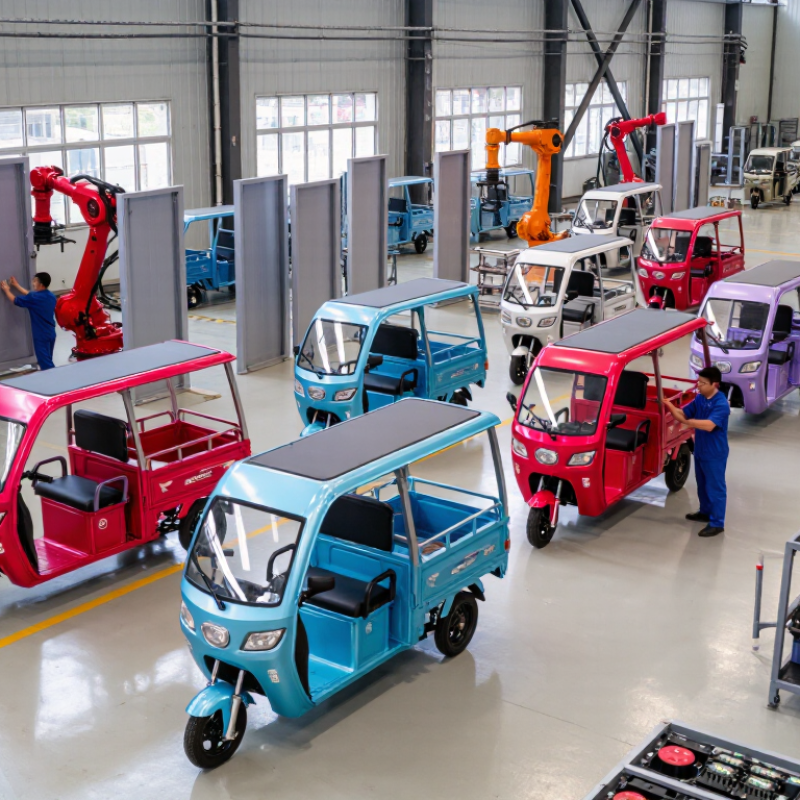
A reliable evaluation begins with the factory floor. Look for consistent frame welding, protected wiring, accessible battery compartments, and seats that remain stable on uneven roads. Motor power, controller quality, braking performance, charging time, and passenger capacity also deserve close attention. Some manufacturers offer lithium batteries, weather-resistant roofs, hydraulic brakes, and customized body panels. These details affect daily comfort and maintenance costs.

Supplier verification matters. Factory videos can help, but independent inspections provide stronger evidence. Ask for product specifications, test records, warranty terms, spare-parts support, and export experience. Confirm whether the vehicle meets the safety and road-use requirements of your destination market. Standards differ widely.

Not every impressive factory is the best fit. A lower price may hide weaker batteries or limited after-sales service. Even experienced buyers can miss small details. This guide therefore compares capabilities carefully, without treating promotional claims as final proof. It also considers communication, production consistency, customization limits, and delivery reliability. The goal is a practical shortlist, not an unquestioned ranking. Check the details. Your passengers will notice them.
China Top Electric Passenger Tricycle Manufacturers?

Market Scope: 2–6-Seat Electric Passenger Tricycles and 48–72 V Systems

China’s electric passenger tricycle market covers practical vehicles rather than one standard design. The main range includes 2–6-seat models for campuses, resorts, communities, factories, and short urban transfers. A 48 V system may suit flat routes and lighter loads. A 60 V or 72 V system usually offers stronger hill performance and better tolerance for frequent passenger use.

Manufacturers should be assessed through engineering evidence, not catalog photos. Ask for battery capacity, motor rating, controller specifications, braking configuration, turning radius, and verified payload data. A six-seat vehicle needs a stronger frame, wider suspension support, and stable weight distribution. During evaluation, inspect weld quality and protective finishing. Test it with realistic passengers on slopes, uneven paving, and repeated stops. Quiet operation helps in residential areas.

Details matter more than slogans. Confirm whether the charger matches the local electrical supply and whether replacement batteries are available. Request service manuals, wiring diagrams, inspection records, and clear warranty terms. A short trial route can expose weak brakes or excessive body flex. It can also reveal uncomfortable seat spacing.

I would not rank suppliers by price alone. A low quotation may exclude shipping protection, spare parts, or commissioning support. Yet technical documents can look complete and still miss real-world performance. That is why independent testing remains important, especially for 48–72 V systems carrying several passengers.

China Electric Passenger Tricycle Market Scope: 2–6 Seats and 48–72 V Systems

Nominal battery energy comparison across common voltage systems, calculated using a fixed 100 Ah battery capacity.

The chart covers electric passenger tricycles designed for approximately 2–6 occupants. Nominal energy is calculated as voltage × ampere-hours: 48 V × 100 Ah = 4.8 kWh, 60 V × 100 Ah = 6.0 kWh, and 72 V × 100 Ah = 7.2 kWh. Actual vehicle range and payload performance vary according to motor power, battery chemistry, vehicle weight, road conditions, and passenger load.

Manufacturer Ranking: OEM Capacity, 1,000–3,000 W Motors, and Export Reach

China Top Electric Passenger Tricycle Manufacturers?

A useful manufacturer ranking should begin with OEM capacity, not advertising claims. The International Energy Agency’s Global EV Outlook 2024 identifies electric two- and three-wheelers as among the road sector’s most electrified vehicle groups. For passenger tricycles, buyers should inspect monthly output, battery testing, welding consistency, and spare-parts control. A practical OEM candidate can provide frame drawings, sample approval records, and repeatable production evidence. Factory visits still matter.

Motor capability also separates serious suppliers. The 1,000–3,000 W range covers many urban passenger applications, but power figures alone can mislead. A 1,000 W motor may suit flat roads and moderate loads. A 3,000 W system offers stronger hill performance, yet increases thermal and controller demands.

Test reports should show continuous power, peak power, payload, gradient, braking distance, and range under defined conditions.

The UNECE Global Status Report on Road Safety highlights the importance of safe vehicle design, though its data is broader than tricycles.

Export reach requires more than container volume. UN Comtrade trade data can reveal shipment patterns, while ISO 9001 records and destination-market compliance files provide stronger evidence. Check whether the manufacturer supports left- and right-hand traffic layouts, multilingual manuals, charger compatibility, and warranty claims.

A factory may ship widely but still lack dependable after-sales service. That weakness is easy to overlook. Rankings should therefore score verified OEM capacity, tested 1,000–3,000 W systems, delivery history, documentation quality, and local service support. The scoring will never be perfect, but transparent evidence is better than a polished catalogue.

Technical Comparison: Battery Types, 60–120 km Range, and Payload Ratings

China Top Electric Passenger Tricycle Manufacturers?

Technical Comparison: Battery Types, 60–120 km Range, and Payload Ratings

Choosing a Chinese electric passenger tricycle requires more than comparing advertised prices. Battery chemistry changes weight, charging behavior, and usable range. Lead-acid batteries remain affordable and easy to replace, but they are heavy and usually deliver fewer effective cycles. Lithium iron phosphate batteries cost more, yet they offer better cycle life and improved weight efficiency. The International Energy Agency’s Global EV Outlook 2024 reports that LFP batteries represented about 40% of the global electric-car battery market in 2023. That trend also influences commercial three-wheelers.

Range is conditional. A claimed 60–120 km may assume moderate speed, flat roads, light cargo, and mild temperatures. Passenger use can reduce range sharply. A 1,000-kilogram tricycle faces different energy demands from a lightweight delivery model. Ask for battery capacity in kWh, not distance alone. Check the label.

Payload ratings need equal scrutiny. The stated figure should include passengers, luggage, battery weight, and accessories. A model rated for 500 kg may perform poorly on steep streets when carrying that maximum load. Independent road testing is still limited because major industry datasets rarely separate passenger tricycles from other low-speed electric vehicles. This is an uncomfortable gap. Buyers should request braking-distance tests, hill-climb results, warranty terms, and battery certification records. The IEA also emphasizes that battery durability depends heavily on temperature, charging habits, and operating conditions. A cautious fleet estimate is more reliable than a perfect brochure number.

Compliance Review: CCC, ISO 9001, UN 38.3, and IEC 62133-2 Certificates

China Top Electric Passenger Tricycle Manufacturers?

Selecting a Chinese electric passenger tricycle supplier requires more than comparing prices. Compliance documents deserve close, model-specific review. CCC certification is central for products entering the Chinese market. It should match the vehicle category, battery configuration, and rated electrical system. Do not accept a certificate with only a similar model number. That small mismatch can create serious procurement risk. Request the certificate, test report, factory details, and validity status.

ISO 9001 indicates a controlled quality management system. It does not prove that every tricycle is safe or compliant. Review production records, incoming battery inspections, welding controls, and final road testing. A reliable manufacturer should explain how defects are traced and corrected. Paperwork alone is not enough. Factory discipline matters.

For lithium batteries, UN 38.3 confirms transport-related testing under recognized international procedures. It is not a complete vehicle safety approval. IEC 62133-2 addresses rechargeable battery cell and battery safety, but its scope must fit the actual battery pack. Some suppliers present cell documents as full-pack evidence. That is a weakness worth questioning. Check pack-level reports, protection-board data, thermal testing, and serial-number traceability. Certificates may be genuine yet outdated, incomplete, or unrelated to the supplied configuration. A careful review may feel slow, but it is cheaper than discovering gaps after shipment.

Supplier Selection: Warranty, MOQ, Lead Time, and Total Cost Metrics

China Top Electric Passenger Tricycle Manufacturers?

Choosing a reliable electric passenger tricycle manufacturer requires more than comparing online prices. Request factory audit records, production photos, battery specifications, and test reports. A dependable supplier should explain motor ratings, charging cycles, frame materials, and safety controls clearly. Ask for a written warranty covering the motor, controller, battery, and frame separately. Coverage periods often differ. Confirm whether replacement parts and technical support are included.

MOQ can strongly affect your cash flow. A supplier requesting 100 units may offer a lower price, but that quantity can create storage problems. Ask whether a pilot order of five to ten units is possible. Lead time should include production, quality inspection, export preparation, and shipping. Get each stage in writing. Delays happen. Build a small buffer.

Tips: Compare total cost, not only unit price. Add tooling, packaging, spare batteries, testing, inland transport, duties, and after-sales labor. Check battery replacement costs over three years. A cheaper tricycle may use components that fail sooner. Request a sample and inspect welds, seat stitching, brake response, lighting, and charger performance. Record defects with photos. One practical mistake is trusting a polished quotation without checking its assumptions. I have found that unclear warranty exclusions can matter more than a small discount. Ask direct questions, even when the answers feel inconvenient.