Blog

What Is a Chocolate Bar Production Line?

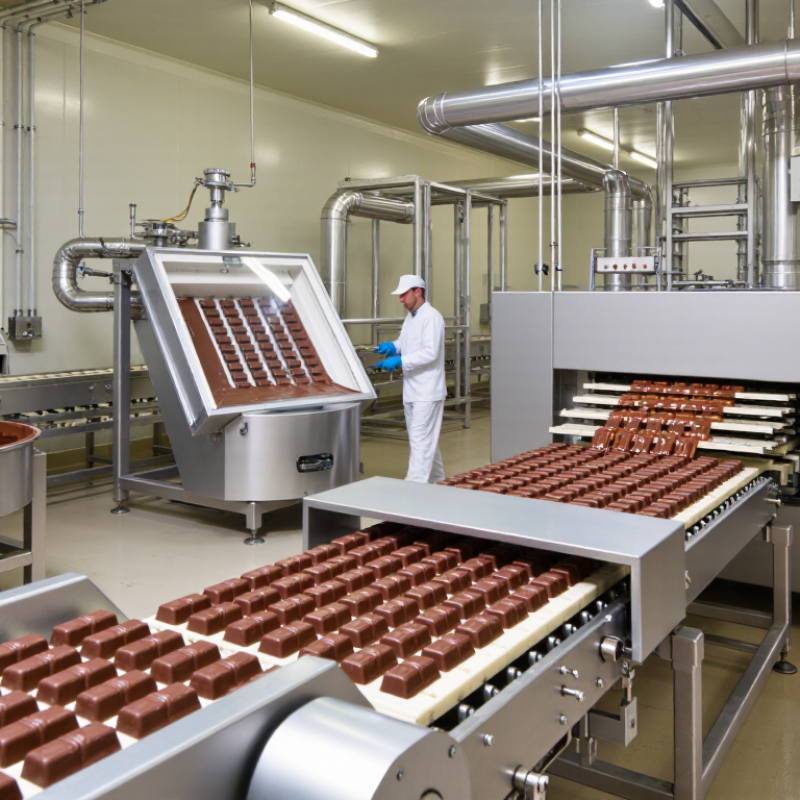
A Chocolate Bar Production Line is an integrated system that transforms measured ingredients into finished chocolate bars. It connects mixing, refining, conching, tempering, molding, cooling, demolding, inspection, and packaging equipment. Each stage affects the final taste, texture, appearance, and shelf stability.

The process begins with carefully weighed cocoa mass, cocoa butter, sugar, and approved milk ingredients. Industrial mixers create a uniform blend. Refiners reduce particle size, often producing the smooth mouthfeel consumers expect. Conching develops flavor while removing unwanted moisture and volatile notes. It takes time.

Tempering then controls cocoa butter crystals through controlled heating and cooling. This step helps chocolate form a clean snap and glossy surface. Molds shape the chocolate before cooling tunnels harden each bar. Sensors can monitor temperature, weight, and production speed. Operators still matter. A machine may detect variation, but trained staff must interpret the cause.

Reliable production also depends on sanitation, allergen control, traceability, and consistent maintenance. Food-grade contact surfaces require documented cleaning procedures. Packaging protects bars from moisture, heat, light, and handling damage. Different recipes and bar sizes may require flexible conveyors, molds, and wrapping systems.

This article explains how a Chocolate Bar Production Line works, what each machine contributes, and where practical problems may appear. Real factories are rarely perfect. Chocolate can thicken unexpectedly, packaging may misalign, and cooling conditions can change during a shift. Understanding these limitations supports better equipment selection, safer operation, and more consistent product quality.
What Is a Chocolate Bar Production Line?

Definition and Purpose of a Chocolate Bar Production Line

What Is a Chocolate Bar Production Line?

A chocolate bar production line is an integrated system that converts cocoa ingredients into stable, saleable bars. Its purpose is more than speed. It controls taste, texture, weight, hygiene, and product consistency. Typical stages include ingredient mixing, refining, conching, tempering, molding, cooling, inspection, and packaging. Each stage uses measured heat, controlled movement, and documented checks.

Industry data shows why this control matters. Grand View Research estimated the global chocolate market at about USD 119 billion in 2023, with continued growth expected through 2030. The International Cocoa Organization reported more than 4.7 million tonnes of cocoa production during the 2022/2023 season. These figures indicate a large supply chain, but they do not guarantee a perfect bar. A small tempering error can create dull surfaces or unwanted fat bloom. A minor filling variation can also affect the final weight.

Tips: Keep chocolate near its required tempering range, often around 30–32°C for milk chocolate. Record temperatures, cooling times, and batch weights. Operators should inspect the first molded pieces before full production begins. Sensors help, but human observation still matters. A shiny bar is not automatically a safe bar. Sanitation records, allergen controls, and traceability checks remain essential. In practice, production lines often need adjustment because room humidity, ingredient viscosity, and equipment wear can change results.

Main Ingredients and Their Preparation

A chocolate bar production line begins with ingredient discipline, not the moulding machine. The core materials are cocoa liquor, cocoa butter, sugar, and often milk powder. Small additions may include lecithin, vanilla, or measured natural flavorings. The ICCO Cocoa Market Report for 2023/24 estimated global cocoa production at 4.461 million tonnes. That volume still demands strict bean selection.

Beans arrive with different moisture levels, sizes, and fermentation quality. Operators sample each lot before cleaning, roasting, and cracking. Roasting develops aroma, but excessive heat can create burnt notes and damage delicate flavor compounds. Winnowing removes shells, while nibs pass through mills to become cocoa liquor. Cocoa butter is filtered and kept warm, often near 40°C, to support accurate dosing. Minor temperature changes matter.

Sugar should be dry, clean, and finely milled before refining. Milk powder needs controlled humidity because clumps can damage feeders and change texture. Refining commonly targets particles near 20–30 micrometres for a smoother mouthfeel, although recipes differ. USDA’s November 2024 Sugar: World Markets and Trade report projected 2024/25 global sugar production at 186.6 million tonnes. Data alone cannot set a recipe. In practice, particle size, viscosity, and moisture must be checked together. I would not treat one laboratory result as final evidence. Chocolate exposes weak controls quickly.

What Is a Chocolate Bar Production Line?

Main ingredients are weighed, blended, refined, conched, tempered, molded, cooled, and wrapped. The chart shows a representative milk chocolate formulation by mass for a 100 kg batch.

Sugar provides sweetness, while cocoa liquor and cocoa butter supply cocoa flavor and a smooth texture. Milk powder adds dairy solids, and a small amount of lecithin and vanilla improves flow and flavor. Actual recipes vary by chocolate type and processing requirements.

Step-by-Step Chocolate Bar Manufacturing Process

A chocolate bar production line turns measured ingredients into a stable, finished product. Operators begin by weighing cocoa liquor, cocoa butter, sugar, and milk powder when required. Accurate dosing matters because small variations change texture and sweetness. The mixture passes through a refiner, where particle size becomes smooth enough for the tongue. It then enters a conching machine. Heat, movement, and controlled aeration reduce harsh aromas and improve flavor.

The chocolate must be tempered carefully. Controlled heating and cooling create stable cocoa butter crystals. This step gives the bar a clean snap, glossy surface, and resistance to fat bloom. Operators check temperature continuously, often within a narrow working range. Tempered chocolate flows into molds through a depositing system. Vibration removes trapped air and spreads the chocolate into each cavity. The filled molds travel through a cooling tunnel, where solidification occurs gradually.

After cooling, the bars are released and inspected for weight, shape, surface marks, and seal quality. Metal detection and routine sampling support food safety controls. Packaging machines then wrap each bar and print production information. The process sounds precise, but real lines need adjustment. A slightly warm mold can dull the surface. Excessive vibration may damage inclusions. Even experienced teams sometimes correct settings more slowly than expected. Clean equipment, recorded checks, and trained judgment help maintain reliable results from batch to batch.

Key Machines Used in Chocolate Bar Production

What Is a Chocolate Bar Production Line?

A chocolate bar production line is a coordinated system of machines that turns prepared chocolate into uniform bars. The process usually starts with a melting tank, where controlled heat keeps the chocolate fluid without damaging its flavor. A mixer then blends cocoa ingredients, sugar, milk solids, and other approved components. Fine grinding equipment reduces particles and creates a smoother texture. Small errors spread.

A refining machine improves mouthfeel by reducing particle size. Conching equipment develops aroma and removes unwanted moisture. The tempering unit is especially important because it controls crystal formation. Sensors monitor temperature changes through each stage. Proper tempering gives chocolate a clean snap and a stable surface. The chocolate then reaches a depositor, which fills moulds with consistent weights. Vibration removes trapped air bubbles. A cooling tunnel sets the bars gradually and prevents visible surface defects.

After cooling, demoulding equipment releases each bar without cracking its edges. Inspection systems can check weight, shape, color, and packaging position. Wrapping machines protect the product from moisture, light, and handling damage. In practice, no line performs perfectly every day. Cooling speed, room humidity, and ingredient temperature can still cause variation. Operators must inspect surfaces and adjust settings carefully. I would not rely on automation alone. A loose sensor or poorly cleaned pipe may affect an entire batch. Sanitation checks, calibration records, and practical operator experience remain essential.

Quality Control, Packaging, and Production Efficiency

What Is a Chocolate Bar Production Line?

Quality Control, Packaging, and Production Efficiency

A chocolate bar production line combines mixing, refining, tempering, molding, cooling, and packing equipment. Each stage affects the final texture, appearance, and shelf stability. Experienced operators monitor chocolate temperature with calibrated sensors during tempering. Small errors matter. A few degrees can create dull surfaces or unwanted fat bloom.

Quality control continues after molding. Staff inspect bar weight, shape, surface gloss, and possible filling leaks. Metal detection and batch records support safer food handling and reliable traceability. Samples should be checked at set intervals, not only at the end. That approach can reveal problems before hundreds of bars require rework.

Packaging protects chocolate from moisture, heat, light, and physical damage. Film tension must remain steady, while sealing temperatures need regular verification. Poor seals can expose bars to air and shorten their usable life. Efficient lines reduce product waste through synchronized conveyors, quick changeovers, and clear operator instructions. Still, no line runs perfectly. Cleaning delays, sensor faults, and uneven cooling can interrupt production. A practical team records these events and adjusts procedures instead of hiding them. Automation improves consistency, but human judgment remains important when materials or room conditions change. Nakne?

What Is a Chocolate Bar Production Line? - Quality Control, Packaging, and Production Efficiency
Production Stage Key Control Point Quality or Efficiency Metric Typical Target or Operating Range Verification Method Production Impact
Ingredient Receiving Ingredient identity, lot traceability, and storage condition Receiving accuracy and traceability coverage 100% lot identification; cocoa and dry ingredients kept dry and protected from contamination Document review, barcode scanning, visual inspection, and sampling Prevents incorrect batches and reduces material-related downtime
Mixing and Refining Particle-size reduction and ingredient dispersion Chocolate mass particle size Commonly about 18–30 micrometres for a smooth eating texture Particle-size testing and sensory assessment Consistent texture supports stable forming and consumer acceptance
Conching Moisture reduction, aeration, and flavor development Moisture content and viscosity Moisture commonly below 1.5%; viscosity maintained within the recipe specification Moisture analyzer, temperature checks, and rheological testing Improves flavor consistency and prevents filling or molding problems
Tempering Stable cocoa-butter crystal formation Temper index, gloss, snap, and bloom resistance Dark chocolate is commonly cooled to approximately 31–32°C before molding; exact values depend on formulation Continuous temperature monitoring and temper meter testing Reduces fat bloom, surface dullness, and demolding defects
Molding and Depositing Accurate portioning, mold cleanliness, and inclusions distribution Bar weight and dimensional consistency Net weight maintained within the approved legal and internal tolerance Checkweigher, sampling plan, and visual inspection Controls giveaway, rework, and underweight risk
Cooling and Demolding Cooling profile and release from the mold Surface appearance, breakage rate, and release performance Cooling conditions commonly controlled around 8–12°C, subject to product design and equipment layout Temperature and humidity logging, visual checks, and defect counts Stable cooling reduces cracking, sticking, and production interruptions
Primary Packaging Wrapping accuracy, seal quality, and coding Seal integrity and coding accuracy No open seals, damaged film, unreadable codes, or incorrect date information Seal inspection, leak or burst testing where applicable, and code verification Protects the bar from moisture, odors, light, and handling damage
Secondary Packaging Counting, case packing, and pallet configuration Pack-count accuracy and case damage rate Correct units per case and secure cases without crushed cartons Automated counting, weight checks, and case inspection Improves warehouse handling and reduces shipment discrepancies
Line Performance Throughput, availability, speed, and quality losses Overall Equipment Effectiveness (OEE) A practical improvement benchmark is to monitor availability, performance, and quality separately; 75–85% OEE is commonly treated as a strong operating range Production records, downtime logs, and quality reports Identifies the largest losses and supports targeted improvement projects
Waste and Rework Control Start-up waste, packaging rejects, and off-specification product Material waste and first-pass yield Many efficient lines aim to keep avoidable process waste below approximately 3%, depending on product complexity Mass-balance calculation, waste weighing, and defect Pareto analysis Lowers material cost and increases saleable output
Food Safety Release Allergen control, foreign-material prevention, and batch release Critical control point compliance and traceability 100% completion of required checks before release; allergen labels must match the approved recipe HACCP records, metal detection or X-ray checks, label verification, and retain samples Protects consumers and supports rapid, controlled response to quality incidents